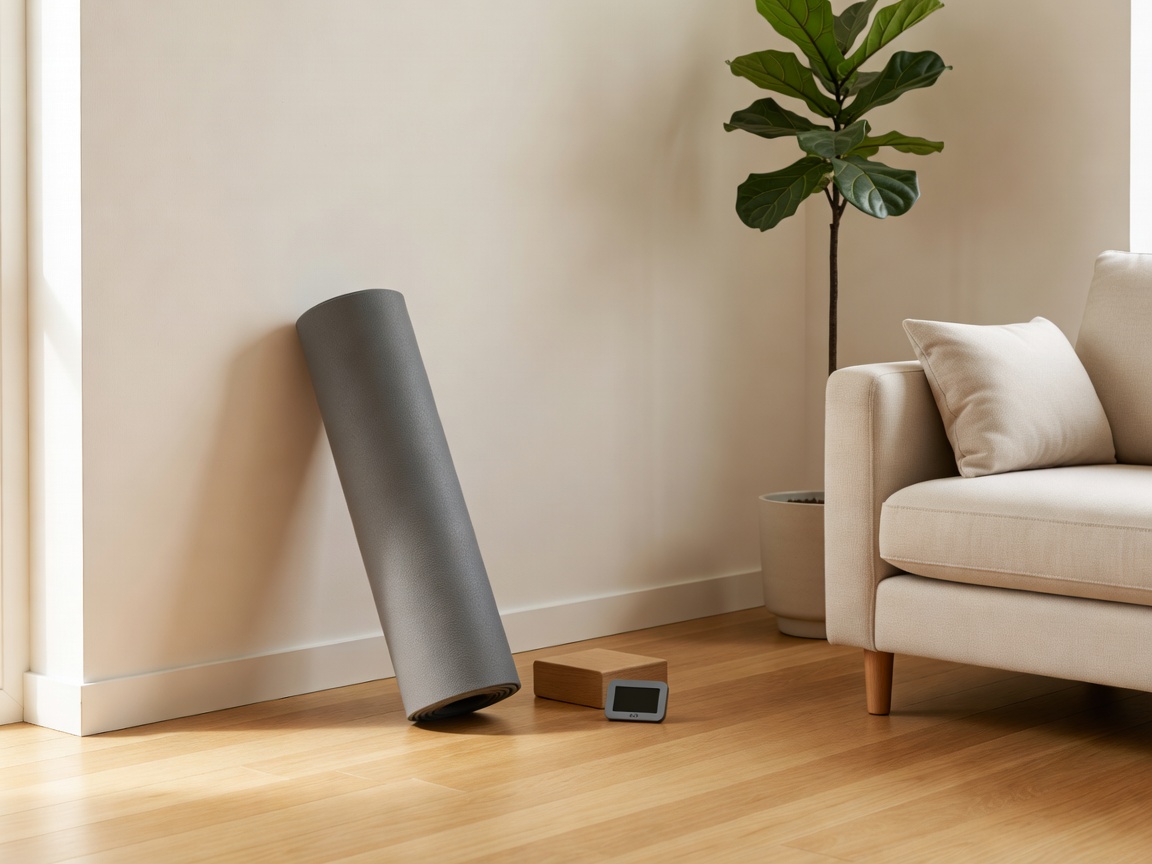
A common misconception about home workouts is that you need a dedicated garage or a spare bedroom to get a good sweat in. The reality is that an effective bodyweight or minimal-equipment workout can be performed in a space scarcely larger than a standard yoga mat. By optimizing your environment, you remove psychological friction and make consistency inevitable.
Space Requirements
To safely perform the majority of beginner exercises, you need an area that is approximately 6 feet by 6 feet. This allows you to lie down fully extended (for exercises like dead bugs or supermans) and extend your arms laterally without striking a wall or furniture.
If your living room requires you to move a coffee table to achieve this space, consider buying furniture gliders to make this a 10-second frictionless process rather than a heavy chore that deters you from working out.
Flooring Considerations
Your flooring dictates the comfort and safety of your session.
- Hardwood/Laminate: Ideal for stability during standing exercises like squats and lunges, but terrible for floor work. A thick exercise mat (10mm to 15mm) is essential to protect your spine during core work and your knees during kneeling exercises.
- Carpet: Excellent for floor comfort, but thick pile carpet can create instability in your ankles during standing balances or plyometrics. A firmer, thinner mat can provide a solid base over plush carpet.
- Interlocking Foam Tiles: If you have a dedicated corner, inexpensive high-density EVA foam tiles provide the perfect balance of grip, firmness, and cushioning.
Equipment: Start Minimal
Do not purchase complex machines or heavy barbell sets when beginning. They take up significant space and often become expensive clothes racks. Start with zero equipment, then gradually add these versatile items as you progress:
| Item | Primary Use | Storage Footprint |
|---|---|---|
| High-Quality Yoga/Fitness Mat | Core work, stretching, floor protection | Minimal (rolls up into a closet corner) |
| Resistance Band Set (with door anchor) | Pulling exercises (rows, lat pulldowns) | Tiny (fits in a small drawstring bag) |
| Adjustable Dumbbells | Adding load to squats, presses, rows | Small (roughly 2x2 feet footprint) |
Airflow and Environment
A frequently overlooked aspect of home training is thermal regulation. Gyms are heavily air-conditioned. Your living room is likely kept at a comfortable temperature for sitting, which will quickly feel stifling once your heart rate elevates. Position a floor fan near your workout space, or open a window prior to starting. Keeping the room cool will lower your perceived exertion and allow you to train harder for longer.