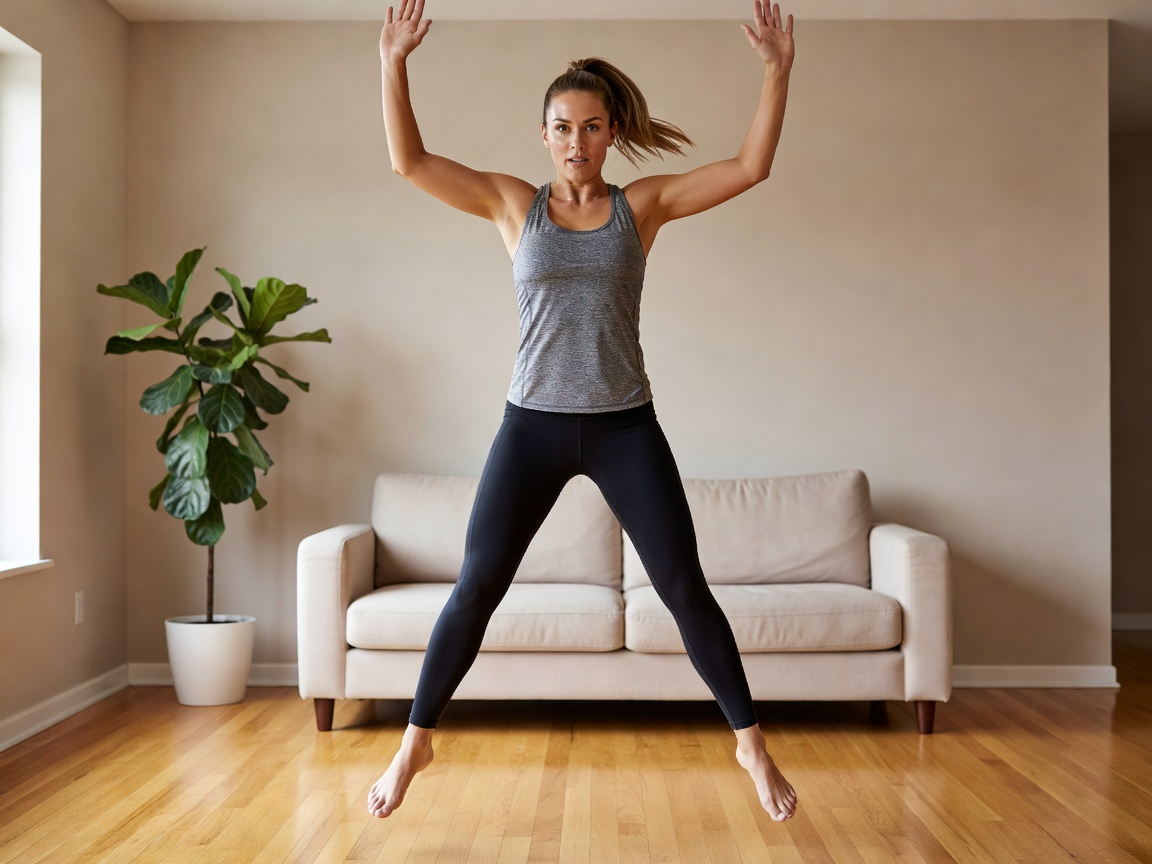
When people think of cardiovascular exercise, they usually imagine miles logged on a treadmill, long outdoor runs, or spinning classes. But cardiovascular health is simply a measure of how efficiently your heart and lungs can deliver oxygen to your working muscles. You do not need a machine to elevate your heart rate—you just need continuous, rhythmic movement.
LISS vs. HIIT: What's the Difference?
Home cardio typically falls into two categories, both of which are valuable for a beginner to understand and utilize.
Low-Intensity Steady State (LISS)
LISS involves maintaining a consistent, moderate heart rate for a longer duration. At home, this can be challenging to achieve without equipment like a stationary bike, but brisk walking around your neighborhood or following a light, continuous step-aerobics routine in your living room works well. LISS is fantastic for recovery and building a base level of aerobic fitness with minimal joint stress.
High-Intensity Interval Training (HIIT)
HIIT alternates short bursts of intense activity with periods of rest or low-intensity movement. Because HIIT requires you to work harder during the active phases, it can deliver significant cardiovascular benefits in a fraction of the time LISS requires. For home workouts in confined spaces, HIIT is often the most practical choice.
Top Home Cardio Movements
To build a home cardio routine, you need a catalog of movements that recruit large muscle groups to quickly raise your heart rate.
- Jumping Jacks: A classic full-body movement. If jumping is harsh on your joints, perform step-jacks by stepping one foot out to the side at a time while raising your arms.
- High Knees: Running in place, driving your knees up toward your chest. Keep your core tight and land softly on the balls of your feet.
- Mountain Climbers: Starting in a push-up position, alternate driving your knees toward your chest. This elevates the heart rate while severely taxing the shoulders and core.
- Skater Hops: Leap laterally from one foot to the other, sweeping the non-working leg behind you. This builds lateral stability, which is often neglected in forward-and-backward motions like running.
A 15-Minute Beginner HIIT Circuit
Perform each exercise below for 30 seconds, followed by 30 seconds of complete rest. Complete the entire circuit of four exercises, rest for one minute, and repeat the whole block three times.
| Order | Exercise | Work Time | Rest Time |
|---|---|---|---|
| 1 | Jumping Jacks (or Step Jacks) | 30 seconds | 30 seconds |
| 2 | Bodyweight Squats (Fast Pace) | 30 seconds | 30 seconds |
| 3 | Mountain Climbers | 30 seconds | 30 seconds |
| 4 | High Knees (or March in Place) | 30 seconds | 30 seconds |
A note on intensity: The goal during the 30-second work phase is to push yourself to a point where holding a conversation would be difficult. If you feel dizzy or nauseous, stop immediately and extend your rest periods. Fitness is built over months, not in a single 15-minute session.
Protecting Your Joints
Cardio at home often involves jumping on hard floors. If you are carrying extra weight or have a history of knee or ankle issues, heavily prioritize low-impact variations. Marching in place, rapid air punches, and step-jacks can elevate your heart rate just as effectively as high-impact jumps, provided you move with intent and speed.