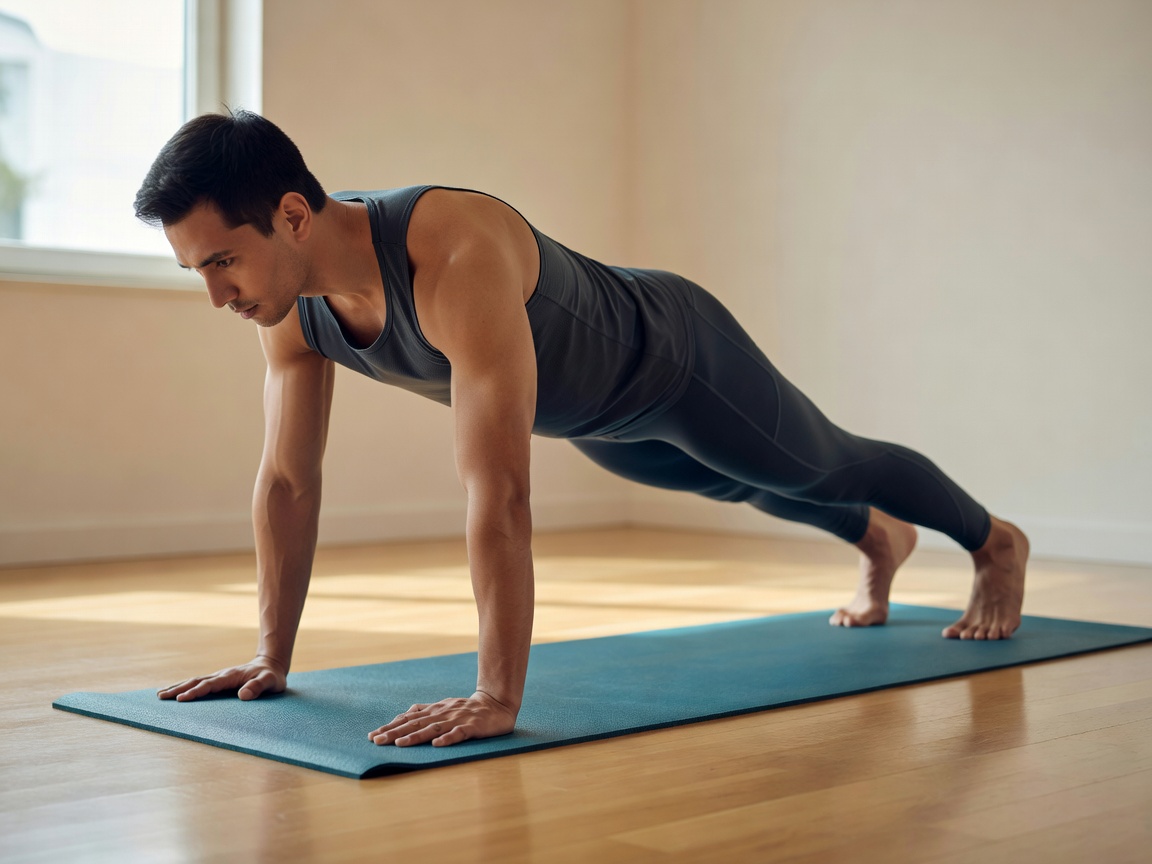
The fitness industry has done the public a disservice by equating "core strength" with "six-pack abs." While a visible rectus abdominis is a product of low body fat, a truly strong core involves a complex cylinder of muscles wrapping around your spine and pelvis. These muscles exist primarily to stabilize your spine and transfer power between your lower and upper body, not to repeatedly flex your torso as done in traditional crunches.
The Myth of Spot Reduction
Before designing a core routine, it is crucial to address the most persistent myth in fitness: spot reduction. Doing hundreds of crunches will not burn fat specifically from your stomach. Fat loss occurs systematically across your entire body based on a sustained caloric deficit. Core training is about building the muscle underneath the tissue, improving posture, and protecting your lower back.
Anti-Movement: The Secret to Core Training
The primary function of the core is to resist movement. To train it effectively, you must practice anti-extension, anti-rotation, and anti-lateral flexion exercises.
Anti-Extension: The Plank
The traditional plank trains your core to prevent your spine from hyperextending (sagging toward the floor).
- Execution: Rest on your forearms and toes. Tuck your pelvis slightly backward (posterior pelvic tilt) and brace your stomach as if expecting a punch. Squeeze your glutes tightly.
- Goal: Aim for a strong, shaking 30-second hold rather than a relaxed, sagging 2-minute hold.
Anti-Rotation: The Bird-Dog
This exercise trains your core to remain stable while your limbs move asymmetrically.
- Execution: Start on all fours (tabletop position). Slowly extend your right arm forward and your left leg backward until both are parallel to the floor. Keep your hips square to the ground—do not let them twist. Return to center and switch sides.
Dynamic Stability: The Dead Bug
A phenomenal exercise that protects the lower back while heavily taxing the anterior core.
- Execution: Lie on your back with arms pointed straight up and knees bent at 90 degrees. Forcefully press your lower back into the floor. Slowly lower your right arm backward and your left leg forward until they hover above the ground. If your lower back arches off the floor, you have gone too far. Return to start and alternate.
A 10-Minute Core Circuit
Perform this circuit 3 times a week at the end of a bodyweight or cardio session, or on its own. Move slowly; speed makes core exercises easier by relying on momentum instead of muscular tension.
| Exercise | Sets | Duration / Reps | Notes |
|---|---|---|---|
| Forearm Plank | 3 | 30-45 seconds | Actively squeeze glutes |
| Dead Bugs | 3 | 10 per side | Lower back must stay flat |
| Bird-Dogs | 3 | 8 per side | Pause for 2 seconds at full extension |
| Side Plank | 3 | 20 seconds per side | Keep body in a perfectly straight line |
By shifting your focus from flexing (crunches) to stabilizing (planks, dead bugs), you will develop a core that not only looks solid but functions perfectly to protect your spine during everyday activities like lifting groceries or playing with your children.